Contact Dermatitis Treatment
in San Mateo, CA

The Allergy and Asthma Clinic provides contact dermatitis evaluation and treatment in the Bay Area, helping patients identify what may be triggering persistent or recurring rashes, itching, redness, and skin irritation. If a rash keeps coming back, one of the most important questions is often a simple one: What is causing it? Our goal is to determine what may be causing the problem and, whenever possible, help you identify practical ways to avoid the trigger and reduce future reactions.
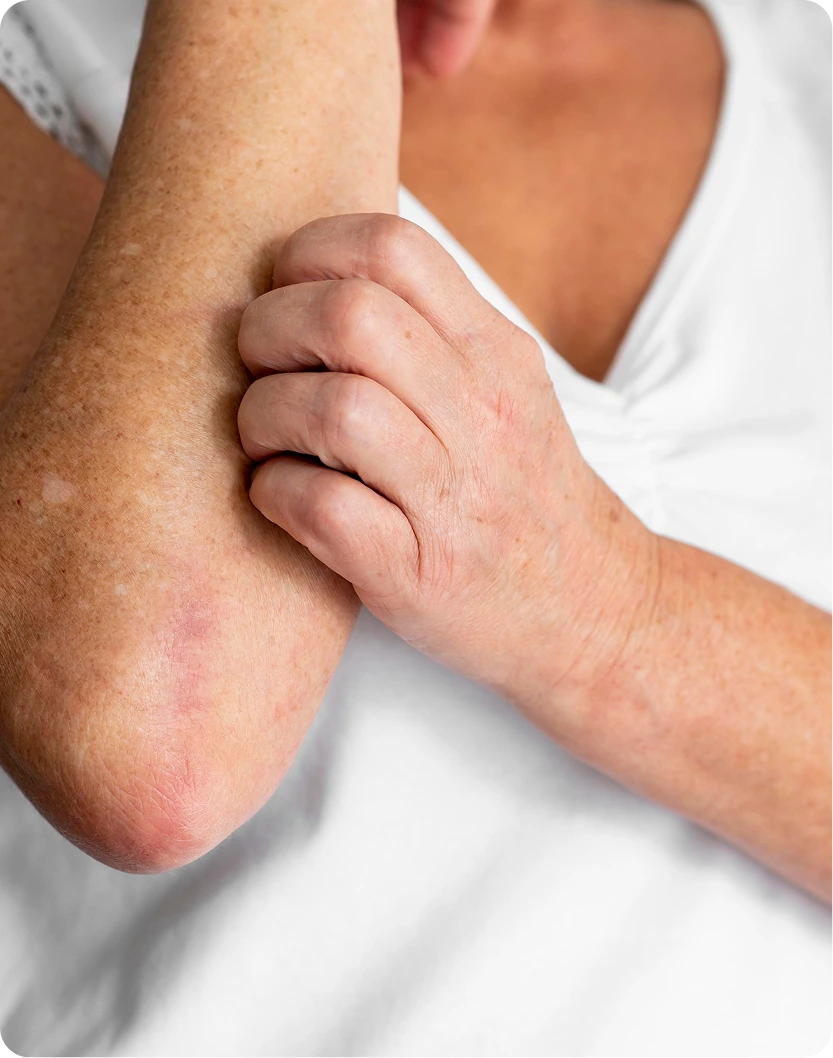
Person scratching arm showing contact dermatitis rash on elbow and forearm

What Is Contact
Dermatitis?

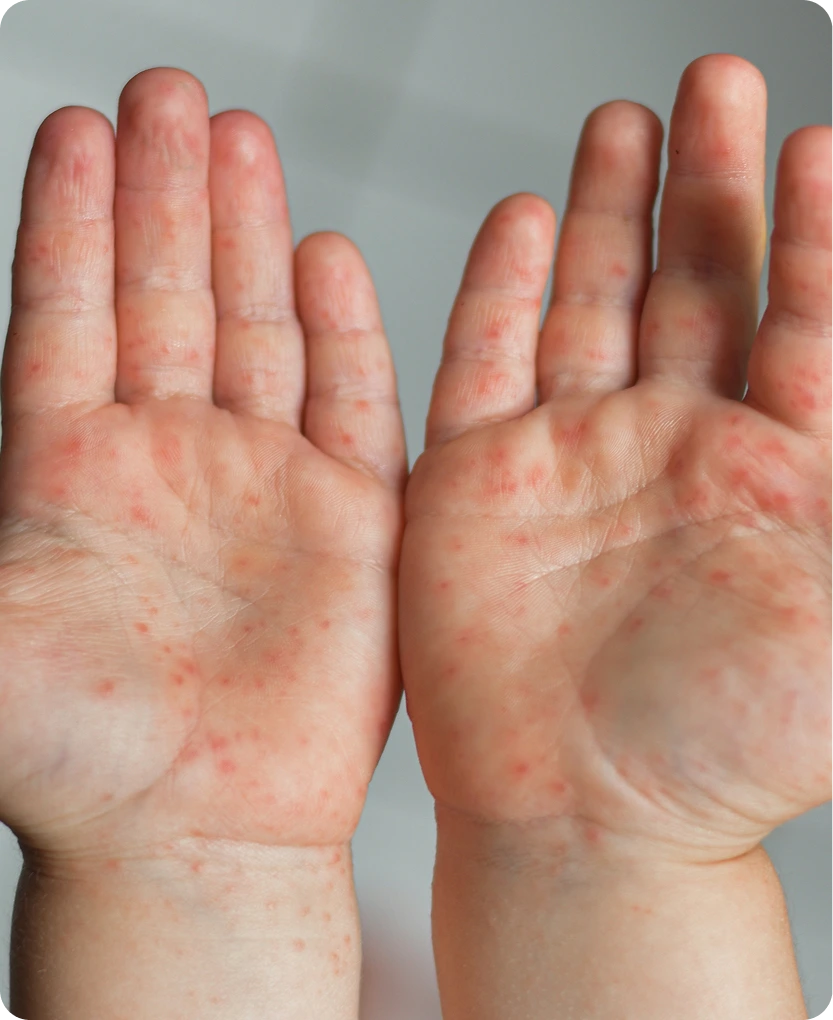
Contact dermatitis is inflammation of the skin caused by something that comes into contact with it. The confusing part is figuring out what that “something” is. Symptoms may include redness, itching, swelling, bumps, blistering, or dry, cracked skin and can range from mild irritation to persistent or recurring dermatitis.
Sometimes a substance directly irritates the skin. Other times, the immune system has developed an allergy to a particular ingredient or material. The rashes can look very similar, but the causes—and what you need to do about them—are different.

Types and Causes

Irritant contact dermatitis is not an allergy. It occurs when something directly irritates or damages the skin’s protective barrier. Common causes include soaps, detergents, cleaning products, solvents, chemicals, and frequent or prolonged exposure to water. Anyone can develop irritant contact dermatitis if the exposure is sufficient, although some people have skin that is more easily irritated than others.

Allergic contact dermatitis is different. It is a delayed allergic reaction that occurs after the immune system becomes sensitized to a particular substance. Common contact allergens include nickel and other metals, fragrances, preservatives, ingredients in cosmetics and personal-care products, hair dyes, rubber chemicals, poison ivy and related plants, and certain topical medications.

One thing that often surprises patients is that you can become allergic to a product you have used for years without a problem. In other words, “I’ve always used this” doesn’t necessarily rule it out. Once your immune system becomes sensitized to an ingredient, something that never bothered you before can begin causing a rash. Because the reaction is delayed, the rash may not appear until hours or even days after exposure, making the responsible substance less obvious.
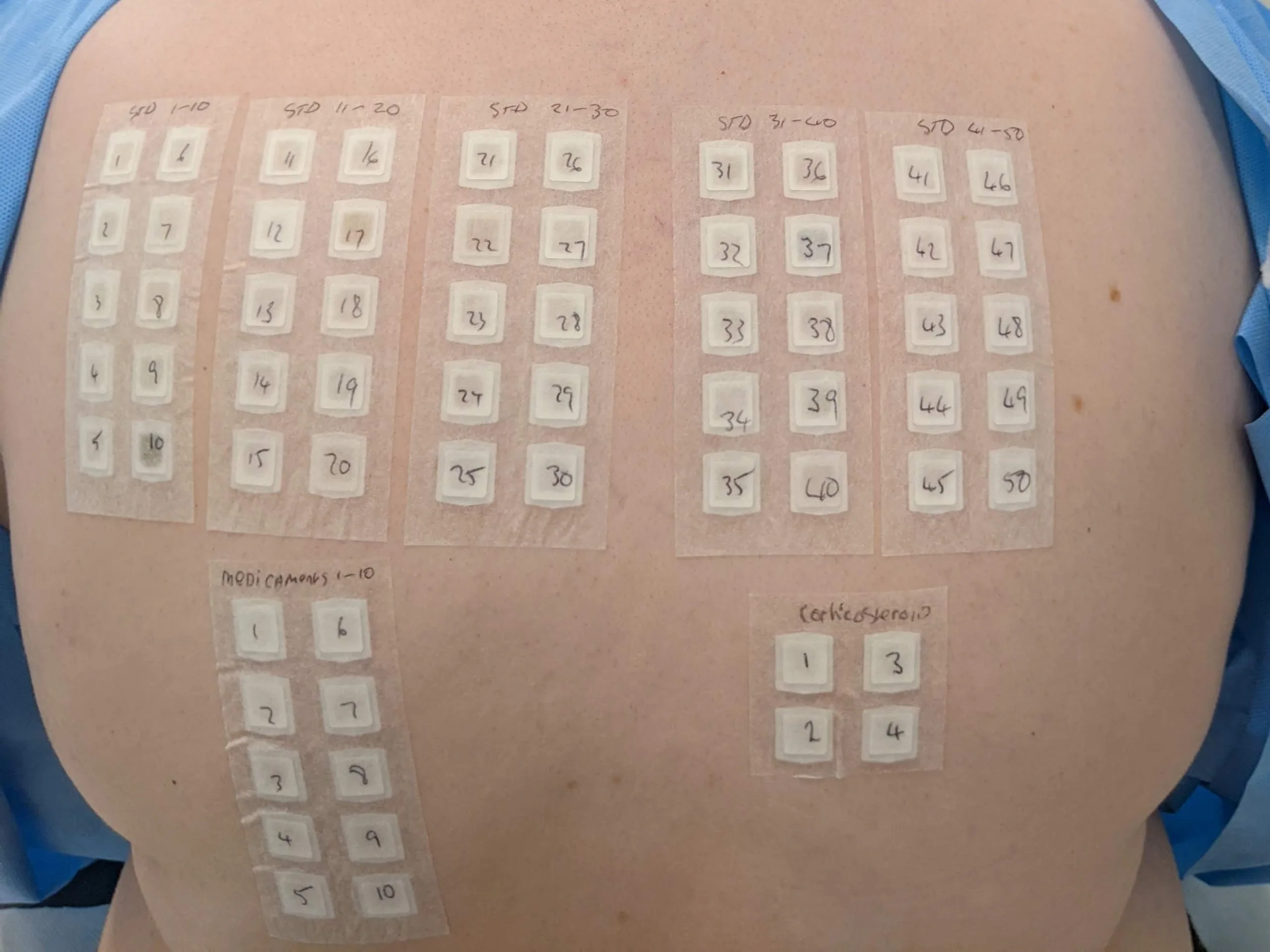
Patch testing on a patient's back for allergic contact dermatitis

Diagnosing Contact Dermatitis

Trying to figure out the cause of contact dermatitis on your own can be frustrating. A shampoo, moisturizer, sunscreen, or cosmetic may contain dozens of ingredients, and the same allergen may be present in several products under a name you do not recognize. Our goal is to identify the actual trigger whenever possible rather than asking you to keep eliminating products by trial and error.
Evaluation begins with a careful review of your symptoms, where the rash occurs, when it develops, previous treatments, occupation, hobbies, and possible exposures at home and at work. We may also review products that regularly come into contact with your skin, including sunscreens, cosmetics, moisturizers, hair products, fragrances, topical medications, jewelry and metals, gloves, adhesives, cleaning products, and occupational materials. The location and pattern of the rash can also provide important clues.
When allergic contact dermatitis is suspected, patch testing is the standard diagnostic test. Small amounts of potential contact allergens are applied to the back and generally left in place for about 48 hours. After the patches are removed, the skin is examined over the next several days because allergic contact dermatitis produces a delayed reaction.
Patch testing is not the same as the allergy skin testing you may have had for pollen, dust mites, pets, or foods. Those skin-prick tests—and blood tests for specific IgE antibodies—evaluate a different type of allergic reaction and do not diagnose allergic contact dermatitis. In selected patients, other allergy testing may still be appropriate when the history suggests a separate or additional allergic condition.
A positive patch test also does not automatically mean that substance is causing your rash. We still have to determine whether the result makes sense based on where your dermatitis occurs and whether you are actually being exposed to that substance. The goal is not simply to find a positive test; it is to identify which exposures are actually relevant to your skin problem.
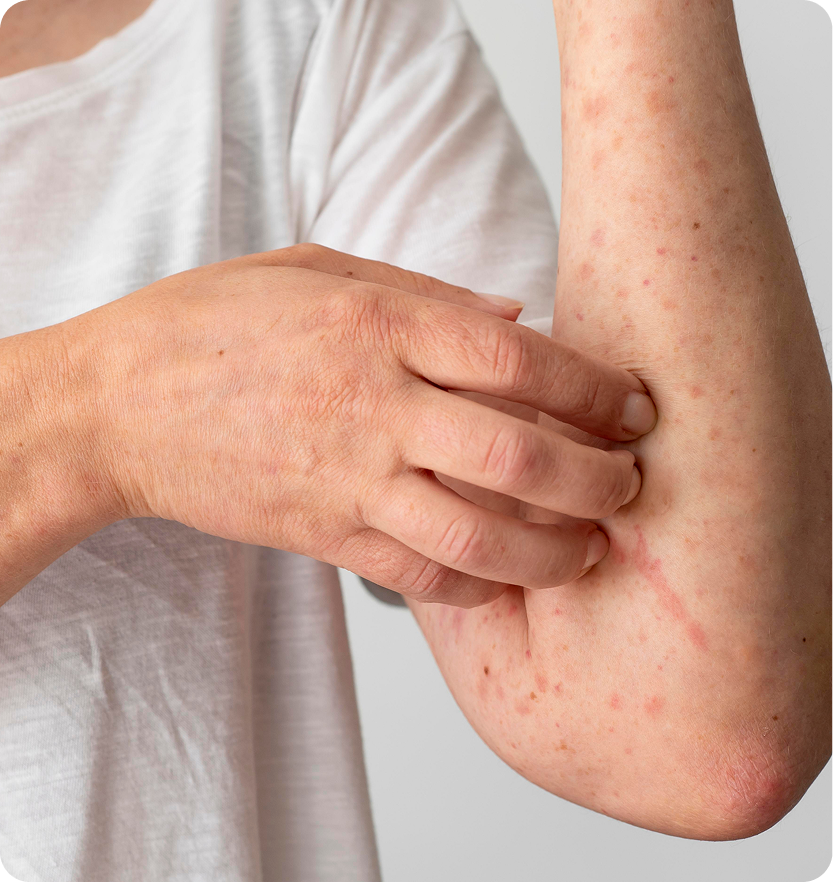
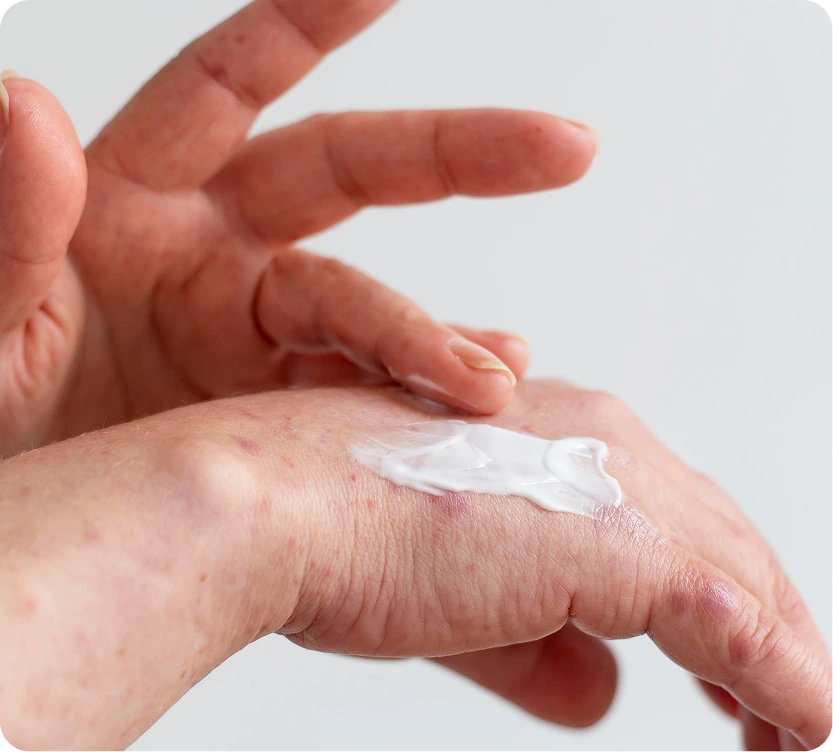
Hand showing contact dermatitis rash with cream applied to affected skin area

Initial Consultation

Your initial consultation includes a detailed discussion of your symptoms, medical history, previous treatments, and potential exposures. We consider where the dermatitis occurs, what seems to make it better or worse, and which products and substances regularly come into contact with your skin. Sometimes the likely cause becomes apparent from the history and distribution of the rash. In other cases, patch testing may be useful to look for an allergic contact trigger.
Treatment goals depend on the cause and severity of the dermatitis. They may include identifying and avoiding specific allergens or irritants, calming an active flare, restoring the skin barrier, reducing the frequency and severity of future episodes, and finding products that can be used safely.
If a rash keeps coming back, another cream may not answer the most important question: Why does it keep coming back? Treatment can be very helpful for calming the inflammation, but when allergic contact dermatitis is the cause, identifying and avoiding the responsible allergen can be an important part of preventing the same problem from recurring.
Hand showing contact dermatitis rash with cream applied to affected skin area

Treatment Options for Contact Dermatitis

For both allergic and irritant contact dermatitis, identifying and reducing exposure to the responsible substance is a central part of treatment. Depending on your individual exposures, recommendations may include:
  • Avoidance of identified allergens or irritants and appropriate product substitution
  • Selecting skin-care and personal-care products that do not contain your identified allergens
  • Protective measures for occupational or household exposures
  • Changes in skin-care routines to reduce irritation and support the skin barrier
  • Practical strategies for recognizing relevant allergens in cosmetics, sunscreens, topical medications, personal-care products, metals, and other everyday exposures
Do not assume that a product labeled “hypoallergenic” is automatically safe for you. The important question is not what it says on the front of the bottle; it is whether the ingredient list contains something you are allergic to.
Treatment of an active episode depends on its location and severity and may include:
  • Topical corticosteroids to reduce inflammation and itching
  • Topical calcineurin inhibitors in selected situations, particularly when a steroid-sparing treatment is appropriate
  • Moisturizers, emollients, and barrier-repair products to help restore and protect the skin barrier
  • Oral antihistamines in selected patients to help with itching or sleep during a significant flare, although antihistamines do not treat the underlying contact allergy
For more extensive or severe dermatitis, additional treatment may occasionally be necessary and should be individualized based on the clinical situation.
Hands with red rash and inflammation across palms and fingers showing contact dermatitis symptoms

Managing Symptoms

Medications can help calm an active rash, but they do not make a contact allergy go away. If you continue to come into contact with the allergen, the dermatitis may keep returning. Another important point is that the rash does not necessarily disappear as soon as you stop using the offending product. Once the skin is inflamed, it takes time to settle down. Improvement can take several weeks, and complete clearing sometimes takes longer.
During that time, appropriate topical treatment, moisturization, gentle skin care, and avoidance of additional irritants can help the skin recover.
Long-term management focuses on avoiding known triggers while protecting the skin barrier. Allergens can appear under unfamiliar ingredient names and may be present in multiple products. Once relevant allergens have been identified, we can help you understand where those substances are found, learn how to read product labels, and select appropriate alternatives.
If dermatitis persists despite careful avoidance, follow-up may be useful to reconsider possible exposures, determine whether another allergen could be involved, or consider whether another skin condition may be contributing.
Child's hand resting on adult's arm showing red, inflamed contact dermatitis rash

Candidates for
Contact Dermatitis Treatment

A contact dermatitis evaluation may be helpful if you experience:
  • Recurring rashes associated with particular products, materials, or activities
  • Persistent itching, redness, scaling, cracking, or blistering
  • A rash that improves with treatment but repeatedly returns
  • Skin reactions associated with workplace chemicals, gloves, cleaning products, metals, or other occupational exposures
  • Reactions associated with cosmetics, sunscreens, fragrances, personal-care products, topical medications, or jewelry
  • A persistent or recurring rash for which the cause remains unclear
Contact dermatitis can affect both adults and children. Identifying an avoidable trigger can be particularly helpful when dermatitis has become persistent or repeatedly returns.

Benefits of Contact Dermatitis Treatment

Appropriate treatment can reduce the itching, burning, redness, and discomfort of an active flare. But treating the rash is only part of the picture. When allergic contact dermatitis is suspected, identifying a clinically relevant allergen can help address why the dermatitis keeps recurring rather than relying only on repeated treatment of each flare.
When a relevant allergen or irritant is identified, reducing or eliminating exposure may decrease the frequency and severity of future episodes and gives the skin barrier an opportunity to recover. Avoidance is not always simple: the same allergen may appear under unfamiliar ingredient names and in multiple products. Understanding where it is found and which alternatives can be used is an important part of long-term management.
Persistent dermatitis can interfere with sleep, work, exercise, and everyday activities. Identifying triggers, controlling inflammation, and developing a practical prevention plan can reduce the disruption caused by recurrent skin symptoms and replace some of the trial and error with a more focused approach.

Cost of Contact Dermatitis Treatment
in the Bay Area

The cost of contact dermatitis evaluation and treatment in the Bay Area varies depending on the complexity of the evaluation, whether patch testing is appropriate, the extent of testing performed, and the treatment required.
Allergist in white coat with stethoscope smiling at camera against teal background

Start Your
Treatment Today!

With more than 30 years of specialized experience, the Allergy and Asthma Clinic evaluates adults and children with allergic conditions, including patients with suspected allergic contact dermatitis. Our approach emphasizes careful history, appropriate testing when indicated, and—most importantly—making sure the test results fit what is actually happening to the patient.
For patients with suspected allergic contact dermatitis, our goal is straightforward: identify the relevant trigger whenever possible, treat the current skin inflammation, and help reduce future exposure and recurrent reactions. If you have been treating a recurring rash without knowing what is causing it, identifying the trigger may be an important next step.
The duration varies depending on the cause, severity of the reaction, and whether exposure to the responsible substance continues. Once the allergen or irritant has been identified and avoided, an active rash may gradually improve over several weeks. Complete clearing can sometimes take longer, particularly if the skin has been inflamed for a long time or the allergen is difficult to completely eliminate.
Patch testing generally requires several visits over approximately one week. Potential allergens are applied to the back and usually remain in place for about 48 hours. The skin is examined after the patches are removed and again later because allergic contact dermatitis causes a delayed allergic reaction. The exact schedule may vary depending on the testing protocol.

No. Patch testing evaluates delayed allergic contact reactions. Skin-prick testing commonly used for pollen, dust mites, animal allergens, and certain food allergies evaluates a different type of allergic reaction. A negative skin-prick test therefore does not rule out allergic contact dermatitis.

If you have developed an allergy to a particular substance, there is not a medication that permanently makes that contact allergy disappear. However, allergic contact dermatitis can often be controlled very effectively when the responsible allergen is identified and successfully avoided. For irritant contact dermatitis, reducing the responsible exposure and helping the skin barrier recover can often substantially improve or resolve the problem.
Contact dermatitis is not an infection, and the rash itself generally does not spread simply because you scratch or touch it. However, other areas can develop dermatitis if they are also exposed to the responsible substance. An allergen or irritant may remain on clothing, gloves, tools, jewelry, plants, or other objects and create additional exposure. Some allergic contact reactions also appear at different times after the original exposure, which can make the rash seem as though it is spreading.
No. Contact dermatitis is inflammation of the skin and cannot be passed from one person to another. However, the substance causing the reaction can sometimes remain on clothing, objects, plants, or another person’s skin and expose someone else to it.
No. Both conditions cause inflammation of the skin and can sometimes look similar, but they have different causes. Contact dermatitis occurs because something touching the skin either directly irritates it or causes a delayed allergic reaction. Atopic dermatitis is a chronic inflammatory skin condition involving the skin barrier and immune system. It is possible to have both conditions. That is one reason patch testing may sometimes be considered when someone with atopic dermatitis continues to have persistent or unexplained areas of dermatitis.
If you know what substance may have contacted your skin, stop the exposure and gently wash away any remaining material. Avoid additional irritating products and scratching when possible. For a mild, limited reaction, cool compresses, moisturizers, and an appropriate over-the-counter treatment may provide temporary relief. If the rash is persistent, keeps returning, is severe, or you cannot figure out what is causing it, an evaluation can help determine whether contact dermatitis or another condition is responsible and whether patch testing may be useful.

Frequently Asked Questions

Five-star rating displayed as filled green stars

First and foremost let me start by saying that these people did one hell of a job figuring out my sinus problems. When I first arrived there, I explained what was going on with me having excessive inflammation in the sinus…after they tested me, I found out that I was being exposed to dust mites which gave me a strong reaction. I followed the doctors guides lines in terms of cleaning my room and ever since, my sinus inflammation went away for good and now I have a healthy sinus. Thank you for everything.

- Johnathon T
Five-star rating displayed as filled green stars
Dr. Engler is great and his staff, both medical and administrative, are wonderful. Dr. Engler is competent, caring, and listens better than any doctor I’ve ever had, constantly and patiently asking if I have any more questions. The staff is great. The nurses are very friendly and helpful. The desk staff is the same. I have been going here over a year and have always received caring and competent treatment. I highly recommend them.
- Tom B
Five-star rating displayed as filled green stars
Hands down the best place to go for Allergies and Asthma. The staff is incredibly kind and caring and so professional and helpful. I’ve been going here for over 30 years and they have gone out of their way countless times to make sure that I was well-cared-for. The nurses are excellent and always make sure to ask how my family is doing not to mention that they give the most painless allergy shots around. They remember little details about me and always make sure to give me a lollipop for my son, even when he’s not with me. Brooke is a great diagnostician and listener and each time I have an appointment with her, I always leave feeling better. The same is true for Dr. Engler.

My 10 year old son also has allergies and asthma and the staff makes sure that he feels well taken care of and comfortable, despite his having Autism and ADHD. He actually looks forward to going there with me, whether it be for my allergy shots or even when he needed allergy skin testing. When you’re a patient at the Allergy and Asthma clinic, you are treated as if you are the only patient they have, even when the waiting room is full. Dr. Engler has hired truly excellent staff, from the front desk people to the nurses and medical assistants. If you have allergies and/or asthma and you live on the Peninsula or even in the city, I highly recommend that you visit the Allergy and Asthma Clinic. They are truly amazing and will make you feel so much better.

-Sandi S.
Five-star rating displayed as filled green stars
I had an amazing experience at this clinic. Dr. Engler and the staff were all extremely welcoming, warm, and thorough in their various lanes of work from the front desk to billing to the assistants to Dr. Engler himself.
One thing I wish I knew before coming in was that the food test covers 80 allergens, and the environmental test covers 80 allergens meaning if you want to do both you need to come two separate days. This is kind of a hassle but definitely worth it since you’ll be tested for 160 allergens whereas most clinics only test 80 total.
Through the tests I figured out what I was allergic to and was advised to use an over the counter medication which has drastically helped and eliminated the symptoms I was experiencing. Dr. Engler also covered all the things I needed to do to reduce my symptoms via my lifestyle which was super helpful with my symptom reduction as well. I’d highly recommend this clinic! Insurance covered the tests and visits. (I have anthem blue cross)
-Christina L
Five-star rating displayed as filled green stars
I’ve been a patient at The Allergy and Asthma Clinic for over 12 years, and I can’t speak highly enough of the care I’ve received. Growing up with severe pollen allergies, I’ve been on and off allergy shots for years, and this clinic has truly been a lifesaver for me.
From the moment you walk in, you’re treated like family. The staff is incredibly kind, caring, and genuinely invested in your well-being. I have never had a negative experience with anyone here; everyone is consistently friendly and supportive.
Dr. Engler is exceptional! He has a remarkable ability to quickly and effectively address any situation. His expertise and compassionate approach have made a significant difference in managing my allergies.
If you’re struggling with allergies or asthma, this is the place to go. I wholeheartedly recommend The Allergy and Asthma Clinic to anyone seeking top-notch care.
-Trevor C